Neo4j NODES 2025 Recap: Graph + GenAI in Production
TL;DR: This Neo4j NODES 2025 recap of graph GenAI use cases shows a clear shift: GraphRAG, knowledge graphs, and agent memory are no longer demos. The 24-hour conference ran more than 140 technical talks (Neo4j, 2025), and the strongest sessions came from teams running graph-grounded AI in production at Cisco, Daimler Truck, and research labs. The throughline: clean, graph-shaped knowledge is what makes enterprise AI reliable and debuggable.
For a few years, “knowledge graph plus LLM” was mostly a conference slide. You’d see a tidy diagram, a toy dataset, and a promise. NODES 2025 read differently. The talks that stood out were not about whether graphs help GenAI. They assumed that, then spent their time on the harder part: shipping it, scaling it, and keeping it accurate once real users start asking real questions.
This recap pulls out the patterns worth your attention if you build or buy enterprise AI. Each is grounded in a session Neo4j highlighted from the event.
What was NODES 2025, in numbers?
NODES is Neo4j’s annual online developer conference. The 2025 edition ran for 24 hours across time zones on November 6 and drew thousands of graph developers, with more than 140 technical talks spanning AI engineering, applications, data intelligence, and knowledge graphs (Neo4j, 2025).
Two keynotes set the tone. Andrew Ng, founder of DeepLearning.AI, joined Neo4j CEO Emil Eifrem to argue that developers should move past simple RAG toward agentic AI systems, and that clean, graph-shaped knowledge is key for reliability and debuggability (Neo4j, 2025). The second keynote was a production story, not a vision talk: Conor O’Shea of Daimler Truck North America showed a live “architecture graph” of every application interaction, fronted by an MCP-driven LLM so anyone from architects to finance could ask plain-language questions about outages, warranty spikes, or design changes and get graph-grounded answers.
That pairing is the whole story in miniature. One keynote on where the field is heading, one on a system already answering operational questions inside a large enterprise.
Why does graph-grounded GenAI beat plain RAG?
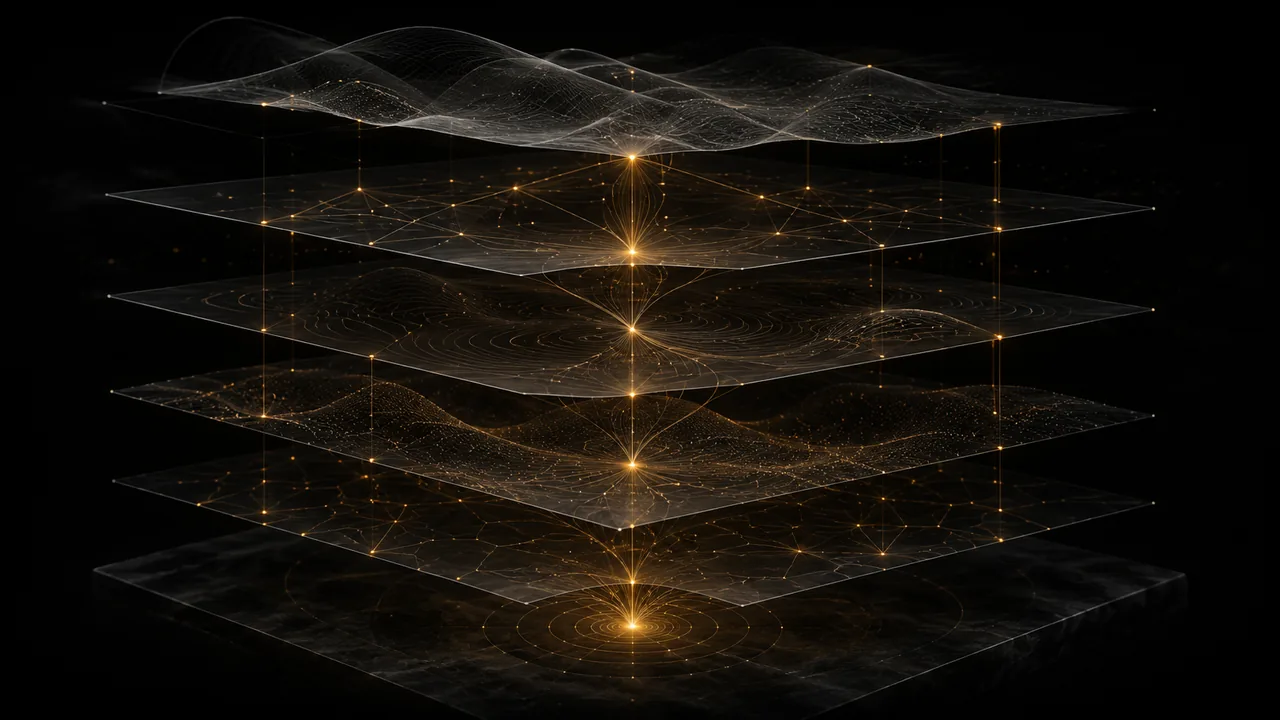
Start with a definition. GraphRAG is retrieval-augmented generation that grounds a model in a knowledge graph, not just a pile of text chunks. A knowledge graph stores typed entities (people, documents, parts, claims) and the relationships between them, so a query can traverse connections rather than guess at them from raw text.
Plain vector RAG retrieves passages that look similar to the question. That works until the answer depends on a chain of relationships the text never states in one place. Several NODES 2025 talks attacked exactly this gap:
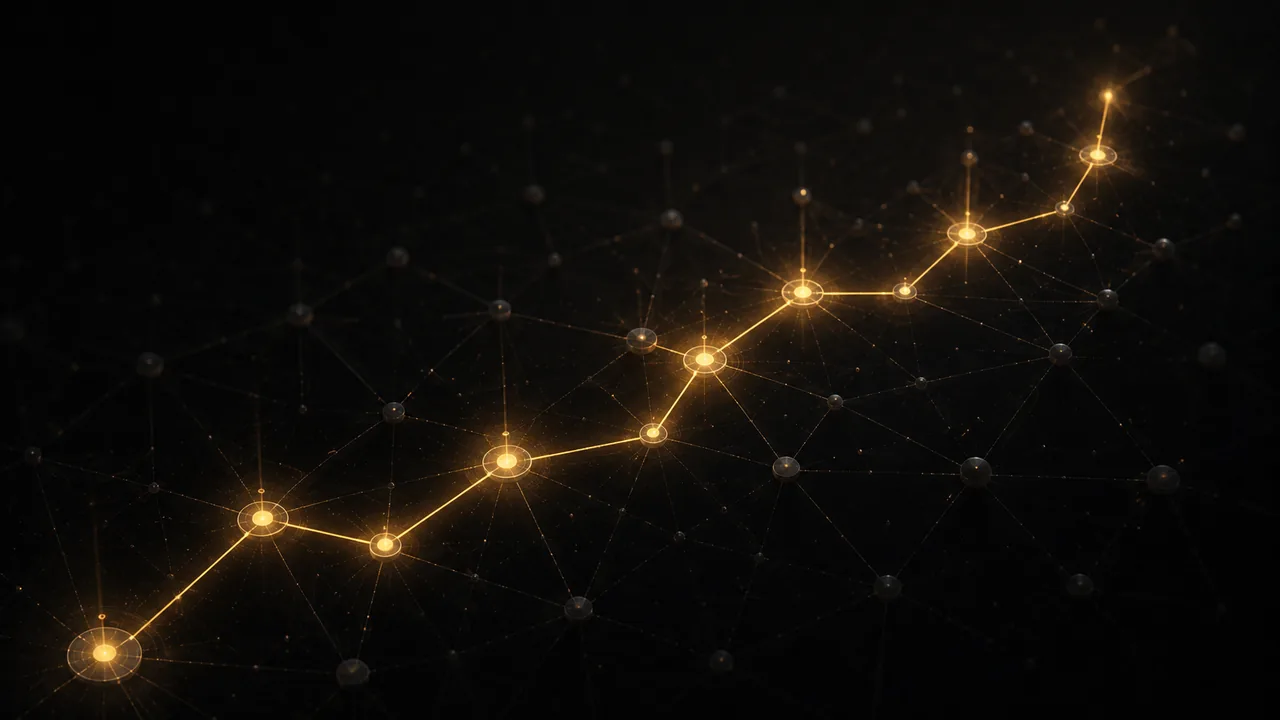
- Multi-hop reasoning. A session on adding a reasoning layer to RAG described the pattern directly: extract entities from a query, link them to graph nodes, traverse related entities with Cypher to surface relationships vector search misses, then feed the model structured knowledge paths like “Company A invested in Company B and partnered with Startup C” (Neo4j, 2025). The model reasons over relationships, not keywords.
- Explainability. Because the retrieved context is an explicit path through named entities, you can see why the model answered the way it did. That is the “debuggability” Ng and Eifrem pointed at.
- Efficiency. Structure also cuts cost. A Neo4j benchmark of two Text-to-SQL agents found that querying a semantic layer for only the relevant subgraph, instead of feeding the full schema on every call, used 20 to 30 percent fewer tokens on average and up to 10x fewer on simple queries, while improving accuracy on complex joins by about 10 percent (Neo4j, 2026).
The shift is from “retrieve more text and hope” to “retrieve the right structure and reason.”
Which production use cases showed up?
The clearest sign of maturity at NODES 2025 was the breadth of real verticals. A sample from the talks Neo4j highlighted:
- Customer support (Cisco). Rajarshee Dhar and Vivek Singh built multimodal understanding of content and its relationships on Neo4j, turning unclear customer inquiries into well-defined problems and producing more accurate, actionable answers (Neo4j, 2025).
- Life sciences. Isaac Ritharson and Ishan Chaudhary presented the Medical Record Knowledge Graph, which turns structured MIMIC-IV electronic health record data into a queryable graph linking diagnoses, procedures, and medications for full patient-history exploration (Neo4j, 2025).
- Supply chain. Pedro Parraguez Ruiz and Nelson Guamán Leiva described a cross-border knowledge graph that turns fragmented public data into an engine for regional resilience, combining vector search with graph context to ground LLMs for real-time queries (Neo4j, 2025).
- Fraud and anti-money laundering. Adam Conovaloff applied graph neural network techniques to fraud detection in IRS networks, matching suspicious network patterns and individual taxpayer properties using multimodal data (Neo4j, 2025).
- Cybersecurity. A team led by Mahantesh Halappanavar presented CyRAG, which uses Neo4j knowledge graphs to store and retrieve interconnected threat-intelligence information for cyber defense decisions (Neo4j, 2025).
These are not five versions of the same chatbot. They are five different teams using the same underlying idea, connect the entities, then let AI reason over the connections, against very different data.
What about agents and memory?
The other big theme was memory. An agent that forgets everything between turns cannot plan or improve. NODES 2025 and its follow-up event treated graph-based memory as a first-class problem.
The pattern that surfaced repeatedly is a three-tier graph memory model: short-term conversation, long-term typed entities, and reasoning traces, with deduplication so the same entity from two sources resolves to one node (Neo4j, 2026). Neo4j also pushed this forward by running NODES AI on April 15, 2026, a one-day event built entirely around three tracks: Knowledge Graphs and GraphRAG, Graph Memory and Agents, and Graph + AI in Production (Sessionize, 2025).
That track list is itself a signal. A vendor does not dedicate a whole conference track to “Graph + AI in Production” unless customers are, in fact, putting it in production.
A concrete example: Vantage Health
Picture a fictional regional health network, Vantage Health, with the same problem most enterprises have. Clinical guidelines live in one document store, prior authorizations in a claims system, formulary rules in a spreadsheet, and the institutional reasoning behind past exceptions in nobody’s system at all, just in the heads of two veteran nurses.
A care coordinator asks a plain question: “Has a patient like this been approved for this therapy before, and on what grounds?” Flat document RAG retrieves a few similar-looking paragraphs and misses the chain that actually matters, the link from this patient’s diagnosis to a past case to the rule that governed the exception.
Wire those systems into a knowledge graph and the question becomes a traversal. The diagnosis links to comparable patients, those cases link to the decisions made, and each decision links to the guideline that justified it. The model answers with a path a human can audit, not a guess. This is the layer SemanticOS is built to be: a knowledge graph and AI-search brain that connects fragmented tools so people and agents can find and reason over institutional knowledge instead of re-deriving it. NODES 2025 was, in effect, 140 proofs that the underlying pattern works.
Key takeaways
- NODES 2025 ran 24 hours and more than 140 technical talks, and the strongest sessions were production systems, not prototypes (Neo4j, 2025).
- GraphRAG beats plain RAG on multi-hop questions because it retrieves explicit relationships, which also makes answers explainable and cheaper to run.
- Real deployments spanned support, life sciences, supply chain, fraud, and cybersecurity, all using one idea: connect the entities, then reason over the connections.
- Agent memory is now a graph problem, modeled as short-term conversation, long-term entities, and reasoning traces.
- Neo4j’s decision to give NODES AI a dedicated “Graph + AI in Production” track (Sessionize, 2025) confirms the shift: graph-grounded GenAI has matured past the demo stage.
Frequently asked questions
What was Neo4j NODES 2025?
NODES 2025 was Neo4j's free 24-hour online developer conference held November 6, 2025. It featured more than 140 technical talks on AI engineering, graph-powered applications, data intelligence, and knowledge graphs, with keynotes from Andrew Ng and Neo4j CEO Emil Eifrem.
What is GraphRAG?
GraphRAG is retrieval-augmented generation that grounds a large language model in a knowledge graph instead of, or alongside, flat document chunks. It combines vector search with graph traversal so an answer can follow relationships between entities, which improves accuracy on multi-hop questions.
What were the main themes of NODES 2025?
The main themes of NODES 2025 were production GraphRAG, knowledge-graph construction, agentic AI and agent memory, and graph-grounded GenAI across verticals such as life sciences, supply chain, fraud detection, and cybersecurity. The recurring point was that these patterns now run in production, not just in demos.
Why do knowledge graphs improve LLM reliability?
A knowledge graph gives a language model explicit, inspectable structure: typed entities and the relationships between them. That structure makes retrieval more precise on multi-hop queries and makes answers easier to trace and debug, which is why graph-shaped knowledge is tied to reliability in enterprise AI.
What is SemanticOS?
SemanticOS is a knowledge-graph and AI-search layer that connects fragmented enterprise tools into one operational brain, so people and AI agents can find and reason over institutional knowledge across systems.
Sources
- NODES 2025, A Recap in 10 Videos · Neo4j, 2025-12
- NODES AI 2026: Call for Speakers · Sessionize / Neo4j, 2025-10
- This Week in Neo4j: Memory, Knowledge Graph, GraphRAG, AI Agents · Neo4j, 2026-05
This writing comes out of a system that runs
SemanticOS ingests an organization's sources into one governed knowledge graph and answers questions by traversing it, reporting the path it took. It is an independent project, and the live graph is on the home page.